Stormuring: Meaning, Uses, Origins, Benefits, and Why This Emerging Term Is Gaining Attention

Introduction to Stormuring
Stormuring is an unusual and relatively new term that has started appearing across different corners of the internet. Unlike familiar words with one universally accepted definition, stormuring currently has several interpretations depending on the context in which it is used. This is one of the main reasons people searching for stormuring may encounter completely different explanations. Some discussions describe stormuring as a structured approach to dealing with uncertainty and complex problems, while other references connect the term with resilience, environmental challenges, personal transformation, or even construction materials.
The lack of one universally established definition makes stormuring particularly interesting. It appears to be an emerging term rather than a traditional English dictionary word. Some websites treat it as a modern conceptual idea, while others use it in relation to a specific construction product. Because of these different interpretations, understanding stormuring requires looking at the context rather than assuming that every mention refers to exactly the same thing.
At its broadest conceptual level, stormuring can be understood as an idea connected with navigating difficult, chaotic, or changing conditions while maintaining structure and resilience. The imagery behind the word is easy to understand: a storm represents uncertainty, pressure, disruption, and force, while the broader interpretations of stormuring emphasize endurance, organization, adaptation, or transformation.
For readers encountering stormuring for the first time, the most important point is that it should not automatically be treated as an established scientific, psychological, business, or technical term. Its meaning is still developing online, and different sources use it in different ways. Some descriptions specifically present it as a structured problem-solving method, while others describe it as a concept associated with repeated disruption and resilience.
What Does Stormuring Mean?
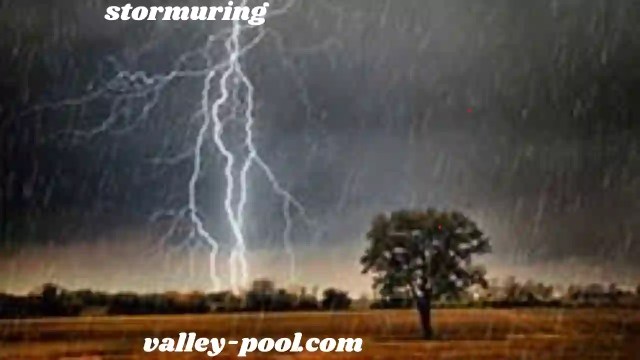
There is currently no single official definition of stormuring that applies to every situation. Instead, the word has developed several possible meanings. In modern online discussions, stormuring is often presented as a concept involving the ability to organize, adapt, and continue moving forward when circumstances become complicated.
One interpretation connects stormuring with structured creativity. In this sense, the concept goes beyond traditional brainstorming. Rather than simply generating a large number of ideas, stormuring involves defining a problem, producing possible solutions, evaluating those solutions, testing promising ideas, and eventually implementing the strongest option. This interpretation emphasizes the movement from chaos to organized action.
Another interpretation connects stormuring with resilience. Under this view, stormuring describes the experience of dealing with repeated disruptions or challenges without allowing each new problem to completely destroy progress made during previous recovery efforts. This interpretation can apply metaphorically to organizations, communities, infrastructure, and individuals.
A third interpretation has appeared in online wellness and lifestyle discussions, where stormuring has been described as an emerging behavior or mindset involving intense experiences, emotional release, or immersion in storm-like environments or stimulation. However, this meaning should be treated as an informal internet interpretation rather than an established psychological concept.
There is also a very different and more concrete use of the word. Stormuring can refer to a waterproof, fiber-reinforced mortar product associated with the Norwegian building-material brand Hey’di. In this context, stormuring is not a metaphor or lifestyle concept at all; it refers to a construction material used for masonry, plastering, and repair applications.
Why Is Stormuring So Difficult to Define?
The biggest reason stormuring can be confusing is that the word has appeared in multiple contexts at approximately the same time. When an established word develops over centuries, dictionaries, universities, industries, and communities generally create a relatively stable definition. Stormuring does not yet have that level of standardization.
Search results currently show explanations that describe stormuring as an innovation methodology, a resilience concept, an internet-coined term, a behavioral idea, and a construction-related product.
This means that someone searching for stormuring may have a completely different intention from another person using the same keyword. A business professional might be interested in structured problem-solving. A homeowner might be researching waterproof mortar. A writer might be interested in the symbolic meaning of the term. Another internet user might simply want to know why the unfamiliar word suddenly appears in search results.
Consequently, the safest way to discuss stormuring is to explain its different interpretations instead of claiming that one definition is universally correct.
Stormuring as a Structured Problem-Solving Method
One of the increasingly visible interpretations of stormuring describes it as a structured approach to creativity and problem-solving.
Traditional brainstorming generally focuses on generating ideas. Participants are encouraged to think freely and produce as many possibilities as possible. The problem is that generating ideas is only one part of solving a real-world problem. An organization can produce hundreds of suggestions without actually deciding which suggestion deserves investment.
The stormuring interpretation addresses this weakness by emphasizing structure. The process can begin with clearly identifying the problem, followed by generating ideas, evaluating them against specific criteria, creating prototypes, testing assumptions, and implementing the most promising solution.
This approach makes stormuring particularly relevant to businesses dealing with uncertainty. Markets change, customers change their expectations, technologies develop quickly, and organizations frequently need to make decisions without having perfect information.
Instead of waiting for complete certainty, stormuring encourages organizations to create a manageable process for moving from uncertainty toward evidence-based action.
The Basic Stormuring Process
Although there is no universally standardized stormuring methodology, some online descriptions present a six-stage process that can be summarized as framing, divergence, convergence, prototyping, testing, and implementation.
1. Define the Problem
The first stage is identifying exactly what needs to change.
A vague problem produces vague solutions. For example, saying that a company wants to “improve customer service” is broad. A more useful problem statement might focus on reducing response times, improving customer satisfaction, or decreasing repetitive support requests.
Clear problem definition gives the rest of the process direction.
2. Generate Multiple Ideas
The next stage is deliberate idea generation. Participants should avoid immediately choosing the first solution that sounds attractive.
Instead, stormuring encourages exploration. Different perspectives can reveal opportunities that may otherwise be overlooked.
This stage can include employees from different departments, customers, technical specialists, designers, managers, or external experts depending on the problem.
3. Evaluate the Options
Generating ideas is not enough. The available options need to be evaluated.
Possible criteria include cost, feasibility, customer impact, time requirements, technical difficulty, risk, scalability, and long-term value.
This is where stormuring differs from an unstructured brainstorming session. Ideas become candidates for decisions rather than simply remaining notes on a board.
4. Build a Prototype
A promising idea should be tested before receiving a major commitment.
A prototype does not necessarily mean a finished product. It can be a simplified version, demonstration, mock-up, pilot process, sample service, or limited experiment.
The objective is to discover problems early.
5. Test and Learn
Testing provides evidence. Instead of relying entirely on assumptions, organizations can observe what actually happens.
A failed test does not necessarily mean that the entire idea was useless. It can reveal what needs to change.
This makes iteration an important part of stormuring.
6. Implement and Improve
The final stage is turning a validated solution into practical action.
Implementation should not necessarily be treated as the end. Feedback can continue after launch, allowing teams to improve the solution over time.
This creates a cycle rather than a one-time event.
Stormuring and Business Innovation
Modern businesses operate in environments where certainty is increasingly difficult to maintain. New competitors can appear quickly, consumer behavior can shift unexpectedly, and technological developments can change established industries.
In this environment, businesses need more than creativity. They need creativity combined with execution.
This is where the conceptual interpretation of stormuring becomes useful. A company may face what feels like a storm of problems: declining sales, new competitors, changing customer expectations, operational inefficiencies, and technological disruption.
Instead of reacting randomly to every problem, a structured approach can help separate urgent issues from important long-term opportunities.
Stormuring, when used in this conceptual sense, therefore represents a transition from uncontrolled reaction toward organized adaptation.
It does not eliminate uncertainty. Rather, it creates a framework for working through uncertainty.
Stormuring and Climate Resilience
Another interpretation of stormuring connects the word with repeated or compounding environmental disruption. This meaning focuses on situations where storms, floods, heavy rainfall, or other severe weather events create pressures faster than communities and infrastructure can recover.
Imagine a community experiencing a severe storm. Roads are damaged, power systems are disrupted, homes require repairs, businesses lose revenue, and emergency services become overloaded. Recovery begins, but before everything returns to normal, another severe weather event occurs.
The second event does not necessarily start from zero.
Infrastructure may already be weakened. Household savings may have been depleted. Emergency resources may be exhausted. Businesses may still be recovering from previous losses.
This creates a compounding effect.
The stormuring interpretation of resilience focuses on preparing systems for this kind of repeated pressure rather than designing them only for one isolated event.
Why Resilience Matters in the Stormuring Concept
Resilience is not simply about surviving an individual crisis. It also involves the ability to recover, adapt, and continue functioning afterward.
A resilient system may have redundancy, flexible resources, alternative communication methods, emergency procedures, strong community networks, and infrastructure designed to tolerate disruption.
Under the stormuring concept, resilience becomes an ongoing process.
A community should not ask only, “How can we survive the next storm?”
It can also ask:
“How quickly can we recover?”
“What happens if another disruption occurs before recovery is complete?”
“Which weaknesses did the previous event reveal?”
“What can be improved before the next event?”
These questions turn disaster experience into information for future planning.
Stormuring in Construction
One of the most concrete uses of stormuring is in construction.
Stormuring is associated with Hey’di Stormuring, described in online references as a waterproof, fiber-reinforced multi-mortar intended for applications involving masonry, plastering, and repairs.
This meaning is important because it demonstrates why context matters when researching stormuring.
Someone searching for stormuring because they are repairing a wall may be looking for information about a construction product. Someone searching for stormuring in a business context may instead be interested in a problem-solving concept.
The construction-related meaning is therefore considerably different from the conceptual meanings found in business and resilience discussions.
When considering any construction product, users should rely on the manufacturer’s current instructions, product documentation, substrate requirements, mixing guidance, curing requirements, and suitability information rather than assuming that general descriptions of stormuring apply to a particular repair project.
Stormuring and Waterproofing Applications
In the construction context, waterproofing is an important consideration for structures exposed to moisture.
Water can create long-term problems in masonry and concrete structures. Persistent moisture may contribute to deterioration, staining, cracking, dampness, or other structural and cosmetic issues.
A waterproof mortar may therefore have a practical role in appropriate repair and building applications.
However, waterproofing is not simply about applying a material to a visible wet surface. The underlying cause of moisture needs to be understood.
For example, water infiltration can originate from poor drainage, cracks, ground moisture, damaged external surfaces, plumbing problems, condensation, or other sources.
A repair material can only be effective when it is suitable for the specific substrate and problem.
Stormuring as a Symbol of Adaptation
Beyond its practical meanings, stormuring has an intuitive symbolic quality.
A storm represents uncertainty and disruption. A structure represents order, preparation, and stability. Combining these ideas creates a powerful metaphor for modern life.
People frequently experience periods when circumstances become difficult very quickly. Plans change, unexpected responsibilities appear, businesses encounter setbacks, or personal goals become harder to achieve.
The stormuring metaphor suggests that resilience does not necessarily mean preventing every storm.
Sometimes it means learning how to operate during the storm.
This distinction is important because no person, business, or community can control every external event. What can often be controlled is preparation, response, decision-making, and learning.
Stormuring and Personal Growth
Some online interpretations use stormuring as a metaphor for personal transformation during difficult periods. This usage is informal and should not be confused with an established psychological theory.
The metaphor is nevertheless easy to understand.
A difficult experience can force someone to reconsider priorities, identify weaknesses, change habits, develop new skills, or rethink previous assumptions.
This does not mean that hardship is automatically beneficial. Difficult experiences can be genuinely damaging and should not be romanticized.
Instead, the stormuring metaphor can emphasize the possibility of learning and rebuilding after disruption.
Personal resilience can involve asking what can be learned from an experience, which resources are available, what needs to change, and what support is required.
Stormuring in Creative Thinking
Stormuring can also be viewed as a useful metaphor for creativity.
Creative work rarely follows a perfectly straight path. Writers, designers, entrepreneurs, artists, developers, and researchers often experience uncertainty before discovering a strong direction.
An initial idea may fail. A prototype may not work. A first draft may require major changes.
Instead of treating uncertainty as proof of failure, a structured creative process treats it as information.
This is one reason the stormuring concept can appeal to people interested in innovation. It suggests that creative chaos can become productive when combined with structure.
The goal is not to eliminate experimentation.
The goal is to make experimentation purposeful.
Stormuring Versus Traditional Brainstorming
The difference between stormuring and traditional brainstorming can be explained simply.
Brainstorming primarily asks:
“What ideas can we generate?”
A structured stormuring interpretation asks additional questions:
“Which problem are we solving?”
“Which ideas are realistic?”
“How can we test them?”
“What evidence supports the decision?”
“How will we implement the result?”
This distinction is significant for organizations because ideas have little value if they never become useful outcomes.
A strong idea that remains unused may be less valuable than a simple idea that is tested, improved, and implemented successfully.
Possible Benefits of the Stormuring Approach
When stormuring is treated as a structured problem-solving concept, several potential benefits can be identified.
Better Problem Definition
Clear problem statements reduce confusion and help teams focus their efforts.
More Inclusive Creativity
Structured participation can give quieter team members an opportunity to contribute instead of allowing the loudest voices to dominate.
Faster Learning
Small tests can reveal weaknesses before an organization invests heavily in an idea.
Evidence-Based Decisions
Testing and evaluation can reduce reliance on assumptions.
Improved Adaptability
Organizations become more comfortable adjusting strategies when circumstances change.
Stronger Resilience
The process encourages learning from disruptions instead of simply returning to previous conditions.
Potential Limitations of Stormuring
Because stormuring does not have one standardized definition, it is important not to exaggerate its status.
It should not automatically be presented as an established academic discipline, scientifically validated psychological method, or universally recognized management framework.
Some websites use highly confident language about stormuring even though other sources emphasize that it is an emerging or informal term.
Another limitation is that a framework cannot replace professional expertise.
For example, a business may use structured problem-solving but still require financial, legal, technical, or industry-specific expertise.
Likewise, a community cannot rely on a conceptual resilience framework alone when designing infrastructure or emergency systems.
The usefulness of stormuring depends on how carefully the underlying ideas are applied.
Why Stormuring Is Appearing Online
The internet is constantly creating new terminology.
Some words originate from communities, some come from brands, some emerge through creative writing, and others are generated or popularized through online content.
Stormuring appears to be an example of a term whose meaning is still developing. Search results show multiple competing explanations rather than one dominant authoritative definition.
This is not necessarily unusual.
A new term can begin as an informal expression and gradually develop a stable meaning if enough people adopt it. Alternatively, it may remain a niche keyword with several unrelated uses.
That uncertainty is part of what makes stormuring interesting.
How to Understand Stormuring Correctly
The best way to understand stormuring is to first identify the context.
If the discussion involves business, innovation, teamwork, or problem-solving, stormuring may refer to structured creativity and adaptation.
If the discussion involves climate resilience, storms, infrastructure, or repeated weather disruptions, stormuring may be used as a metaphor or emerging concept describing compounding stress.
If the discussion involves construction, waterproofing, masonry, or repair mortar, stormuring may refer to the Hey’di product.
If the discussion involves online lifestyle or personal-development content, stormuring may have another informal meaning.
Therefore, context is more important than memorizing one definition.
Is Stormuring a Real Word?
Stormuring is certainly a searchable term, but that does not mean it has a universally recognized dictionary definition.
Current online sources disagree about its meaning and origin. Some describe it as an emerging concept, while others emphasize that it is not a standardized word or established technical term.
The construction-related use is more concrete because it refers to a named product, whereas the broader conceptual meanings are less standardized.
For this reason, it is better to describe stormuring as an emerging or context-dependent term rather than claiming that it has one official meaning.
The Future of Stormuring
The future of stormuring will largely depend on how people continue using the word.
If businesses adopt it consistently to describe a specific problem-solving methodology, its business meaning could become clearer.
If climate and resilience researchers begin using it consistently, it could develop a more specific environmental interpretation.
If online communities continue using it as a lifestyle or personal-growth expression, another meaning could become dominant.
It is also possible that stormuring will remain a flexible internet term with several unrelated meanings.
Language changes through use. A word does not necessarily need to begin with an official definition before people start experimenting with it.
Frequently Asked Questions About Stormuring
What is stormuring?
Stormuring is an emerging and context-dependent term. Online sources use it to describe ideas ranging from structured problem-solving and resilience to a construction mortar product and informal lifestyle concepts.
Is stormuring an official dictionary word?
Stormuring is not currently a widely established standard English dictionary term. Its meaning remains inconsistent across online sources.
What does stormuring mean in business?
In business discussions, stormuring can refer to a structured approach to solving difficult problems by defining challenges, generating ideas, evaluating options, testing solutions, and implementing results.
Is stormuring related to climate change?
Some online discussions use stormuring to describe repeated or compounding weather-related stress and the need for stronger resilience. This is an emerging conceptual usage rather than a universally standardized scientific term.
What is Stormuring in construction?
In construction, Stormuring can refer to Hey’di Stormuring, a waterproof, fiber-reinforced multi-mortar associated with masonry, plastering, and repair applications.
Is stormuring a psychological concept?
Stormuring has appeared in some online discussions as a metaphor for emotional intensity, transformation, or resilience. However, it should not automatically be treated as an established psychological theory or clinical concept.
Why are people searching for stormuring?
People may encounter the term through search engines, business content, construction information, social media, or emerging online trends. Because the term has multiple uses, searches can lead to very different explanations.
Is stormuring the same as brainstorming?
Not necessarily. In one emerging business interpretation, stormuring expands beyond brainstorming by adding evaluation, testing, implementation, and iteration to the creative process.
Can stormuring be used for personal development?
It can be used as a metaphor for navigating difficult periods, adapting to change, and learning from challenges. However, this is an informal interpretation rather than a formally established personal-development system.
Does stormuring have one fixed meaning?
No. One of the defining characteristics of the term is that its meaning depends heavily on context. Business, climate, construction, and online lifestyle discussions can use stormuring differently.
Final Thoughts on Stormuring
Stormuring is an intriguing emerging keyword because it sits at the intersection of several different ideas. It can describe structured problem-solving, resilience during disruption, an emerging metaphor for adaptation, or a concrete construction-related material depending on the context.
The most responsible way to discuss stormuring is therefore to avoid pretending that one definition is universally accepted. Current online usage shows that the term is still developing, and different communities have assigned different meanings to it.
As a problem-solving concept, stormuring emphasizes the movement from uncertainty toward organized action. As a resilience metaphor, it highlights the importance of preparing for repeated challenges rather than assuming every disruption will happen independently. As a construction term, it points toward a specific waterproof mortar product. These interpretations may appear unrelated, but they share a common theme: dealing with difficult conditions through structure, preparation, adaptation, and resilience.
That broader idea explains why stormuring has attracted attention. Modern life is full of uncertainty, whether the challenge involves technology, business, infrastructure, environmental disruption, or personal change. People and organizations increasingly need ways to respond without becoming overwhelmed by complexity.
Ultimately, the most useful lesson behind stormuring is not that every difficult situation can be controlled. Instead, it is that uncertainty can be approached deliberately. Problems can be defined, possibilities can be explored, solutions can be tested, weaknesses can be identified, and strategies can be improved.
Whether stormuring eventually becomes a standardized term or remains an evolving internet expression, its different interpretations provide an interesting example of how language develops in the digital age. The keyword may still be unfamiliar to many people, but its growing variety of uses makes it worth understanding through context, evidence, and careful interpretation.
ALSO READ : OnlyWorkMoods Com: What It Is, What It Covers, and Is It Worth Visiting?


